A previous series on this blog talked about the wealth of information we mediumwave DXers have for listing stations, and ways to reference it in the field. Last year about this time I bought an eReader (a Nook Color), with the idea of using it to read books and other saved documents. What I discovered was how easy it was to create customized station lists from various web sources using my laptop, then transfer them to the eReader for reference in the field when DXing. The
second part in that series talked about using the eReader for displaying DX lists.
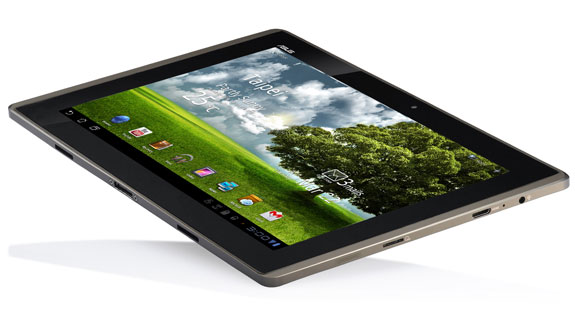
After a summer's use it became apparent that a tablet computer might be an even more usable device, as it would allow better web access, more options for file reader software, and a bigger screen (10 inch vs. 7 inch). This spring I purchased an Asus Transformer TF101 Android tablet. It has been a good choice.
As mentioned previously, typical station lists can be created in several forms using various web or other sources. Reader apps for tablet computers can handle .TXT (text) file format, .PDF (Adobe's Personal Document File) format, .HTML (web) format, and others - even .XLS (XCEL) spreadsheet files or comma-separated value text (.CSV) files.
Three favorite web sites of mine for mining mediumwave AM data are Lee Freshwater's
AM Logbook,
MWList, and the
FCC's AM Query. Let's review what they have to offer.
AM Logbook will generate a single web page list of stations by frequency, callsign, state, city, transmitter location, and others. US and Canadian stations are represented. The page can be saved locally by your browser and transferred to your tablet through either a hard connection, WiFi, or a Cloud service like Dropbox or Box. AM Logbook also supplies its AM list in downloadable XCEL spreadsheet form.
MWList, a more complicated site, attempts to document all AM stations worldwide, by country. It encourages users to register, but its data is also available to non-registered users. MWList has the ability to create a customized country file in PDF form which is then made available for your download. This is really the way to go on this site. Enter the site, login if you are a member or click "Continue as guest", then click the "Downloads" heading tab. Check off the countries desired, then download your PDF file. Transfer to your tablet as indicated above.

MWList also outputs country data to a generated web page, like AM Logbook. Country data is initially displayed by frequency, but the data columns on the page can be click-sorted by location, callsign, state, etc. Data is presented in an HTML "frame" within a parent page, so saving the web page core data in this way is not as easily done. Sometimes it is necessary to break the frame out into its own window, and this is the technique that I use. Some browsers allow this option and present a right-click menu item to accomplish it. Firefox and Opera include this function. Once the frame is broken out into its own page it is easily saved as HTML. Text formatting is maintained this way.
Data from both AM Logbook and MWList are based on a variety of sources, one being actual reception reports. Canadian data seems accurate for both, as it is not drawn from the FCC database. Ditto Mexico and other countries for MWList.
The third option, the
FCC's AM Query, can also be used to create a station reference file. US data should be highly accurate, but be suspicious of any foreign data. You would be better off with AM Logbook or MWList for Canada and Mexico or other countries. Output can be displayed as a simple web page or a text file, easily transferred to a tablet, as above.
My own Radio Data MW program has the capability of creating station list files in HTML and CSV formats. I often use its files on my tablet, as I can set them up to show expected signal strengths and sunrise/sunset times for each station, something not available with any of the other sources.
Much reader software (in the form of apps) is available for the tablet. Adobe Reader (free) and ezPDF Reader (less than $5) are good ones for displaying PDF format. Your tablet already has text reading software and an HTML browser, though many others are also available for free through the
Google Play Store (previously known as Google Marketplace). Apple's iPad has similar software available at their
App Store.
An advantage to staying with the HTML format for your AM list is the tablet browser's pinch-to-zoom function. With file sizes fairly large, and long line lengths, it is advantageous to be able to zoom the text smaller and larger. Most PDF readers have the pinch-to-zoom capability, but not all work as well as the web browsers. Basic text (.TXT) reader software doesn't always have an appropriate zoom capability, or may wrap long line lengths causing confusion. HTML is the better choice here.
Tablet batteries typically last 6-10 hours, more than enough for a casual afternoon or night of DXing. All tablets seem to have sound recording capability, and most have video and sound recording, both. Thus your device can also be used to create a record of your DX catch for personal record or verification purposes, an added bonus to owning a tablet.
Turn your tablet device into a mediumwave DXer's station reference!
 |
| Viewing a MW database on a tablet |